Cookie Preferences
By clicking, you agree to store cookies on your device to enhance navigation, analyze usage, and support marketing.
Thank you! Your submission has been received!
Oops! Something went wrong while submitting the form.

.svg)

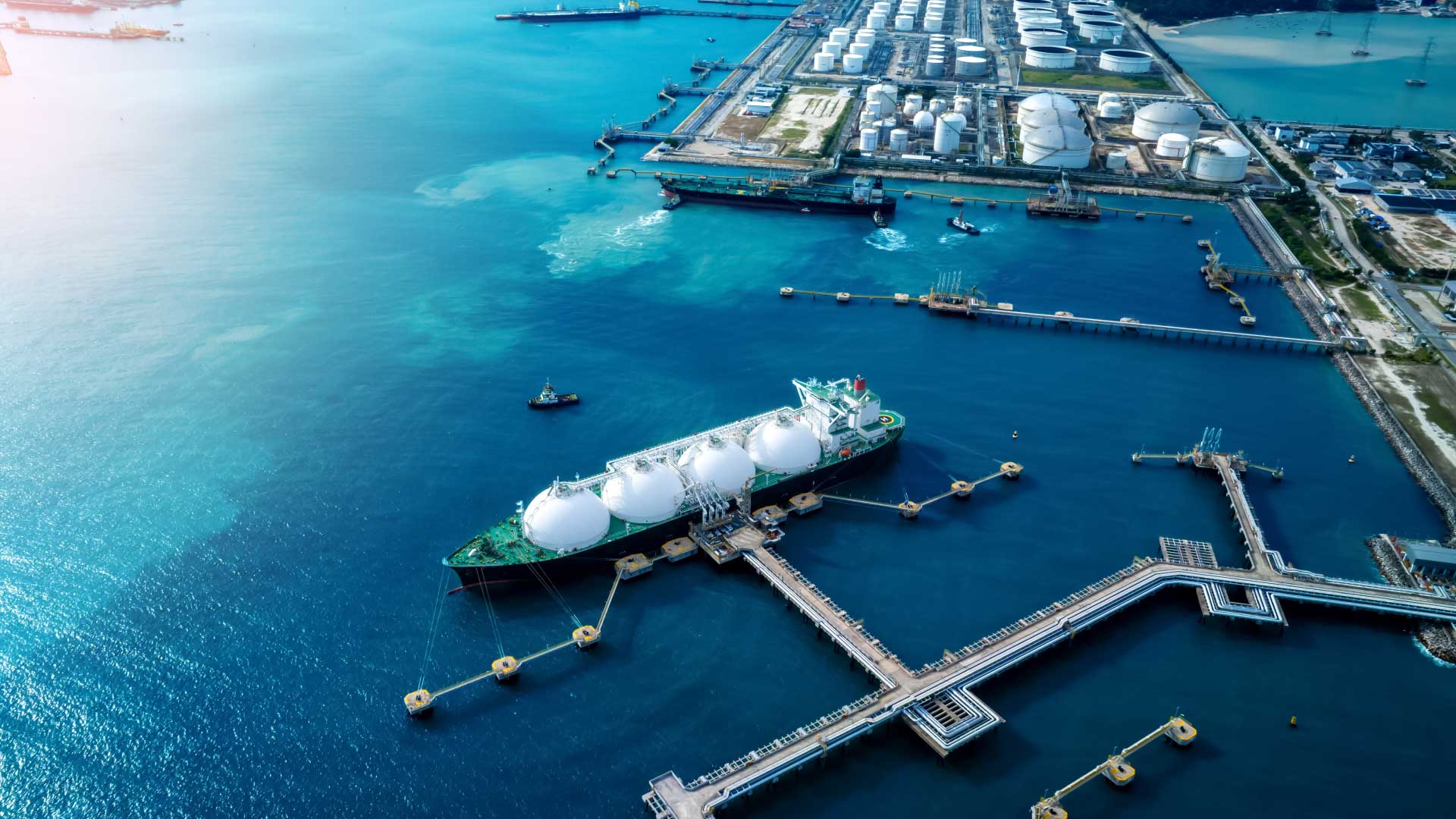
The global LNG market is heading into one of the most transformative periods in its history. By 2030, the world will see more new LNG production capacity come online than at any point in the last decade, reshaping trade flows, price behavior, and competitive dynamics. Operators preparing for LNG26 already know this will be the defining theme of the years ahead, and the companies that adapt fastest will set the pace for the next cycle of industry leadership.
But this supply wave is not arriving in a vacuum. It enters a landscape strained by price volatility, uneven regional demand, geopolitical uncertainty, and rising expectations for reliability. Operators are under pressure to stabilize operations, protect margins, and make faster, more accurate technical decisions with fewer resources.
This tension between expansion and instability is exactly where the next generation of industrial AI becomes essential.
According to the International Energy Agency, nearly 300 bcm of new LNG export capacity is scheduled to come online by 2030, driven largely by investments in the United States and Qatar. The US alone has sanctioned record levels of liquefaction capacity, while Qatar’s strategic expansions continue to strengthen its position as the world’s most influential LNG supplier. This expected increase of 250 bcm annually by the end of the decade represents a structural shift in the balance between buyers and sellers.
In theory, more supply will ease affordability pressures. In practice, operators face a more competitive environment, narrower margins, and greater operational scrutiny across every part of the value chain.
Demand tells a more complex story. While overall global gas demand is expected to grow at roughly 1.5 percent per year through 2030, near-term LNG demand in price-sensitive markets remains constrained. Asia-Pacific will account for half of all new demand growth, with countries such as China, India, and emerging Southeast Asian markets continuing to expand LNG’s role in power generation. The Middle East is also intensifying its switch from oil to gas for electricity production.
The result is a market that is not shrinking but reshaping, with regional shifts that require operators to think beyond traditional optimization methods.
Even with new supply coming online, affordability remains fragile. Governments in emerging markets still rely heavily on subsidies to stabilize consumer energy costs, and volatility persists due to geopolitical disruption and uneven winter demand profiles.
At the same time, security of supply has become a top priority for buyers, especially since the post-2022 reconfiguration of global gas flows. LNG has proven its strategic value as a flexible buffer, and the share of destination-free contracts is expected to exceed half of all global LNG trade by 2030. This flexibility brings opportunity, but it also intensifies the need for operational agility.
Finally, reliability is now a strategic differentiator. As more countries depend on LNG for baseload and interim decarbonization strategies, disruptions have wider national and economic consequences.
This is the environment where industrial AI moves from “interesting” to “essential.”
The LNG industry has always dealt with uncertainty, but the next five years will magnify operational complexity. Fluctuating prices, shifting demand patterns, and expanding supply capacity place enormous pressure on operators to run their assets more efficiently, safely, and consistently.
Beyond Limits brings a different class of AI to this problem. Built on industrial engineering principles, symbolic reasoning, and data-driven intelligence, our technology is designed specifically for high-stakes environments where every decision has real financial and operational consequences.
Here is where AI delivers tangible value in the context of Global LNG Dynamics:
1. Improve plant reliability amid supply and demand volatility
AI identifies anomalies early, priorities risks, and guides teams through corrective actions before disruptions escalate. In an environment where reliability has direct market-level implications, this capability becomes a competitive advantage.
2. Optimize production for affordability and margin protection
Every percent of efficiency matters. AI can recommend the most efficient operating envelope, reduce energy consumption per ton, and identify bottlenecks before they become losses.
3. Strengthen security of supply with real-time operational intelligence
As supply chains grow more dynamic, operators need faster situational awareness. AI gives operations and commercial teams insight into asset health, system constraints, and downstream impacts before they ripple into supply commitments.
4. Preserve critical knowledge as expertise gaps widen
The industry is facing a demographic shift, and the depth of LNG operational expertise is not easily replaced. AI captures institutional knowledge and applies it consistently, reducing decision variability and helping new engineers perform with more confidence.
5. Enable faster, more accurate decision-making across the value chain
From feed gas variability to liquefaction performance, from storage optimization to loading, every decision shapes commercial outcomes. AI augments workforce judgment with engineered models that reason through complex scenarios at speed and scale.
The supply wave will reshape the market. The question is who benefits from it.
Operators who continue to rely on traditional decision-making, static processes, and reactive troubleshooting will struggle to keep pace with a more dynamic LNG environment. Those who pair operational excellence with AI-driven intelligence will not only remain competitive but maximize the opportunities that arise from this global shift.
Beyond Limits works with LNG operators seeking not just to adapt to the future but to shape it. Our industrial AI solutions are engineered for the realities of LNG operations: complex, asset-heavy, risk-sensitive, and always under pressure to deliver safe, reliable, efficient output.
If Global LNG Dynamics signals anything, it is that resilience is the new performance metric. And AI is no longer optional for achieving it.