Cookie Preferences
By clicking, you agree to store cookies on your device to enhance navigation, analyze usage, and support marketing.
Thank you! Your submission has been received!
Oops! Something went wrong while submitting the form.

.svg)

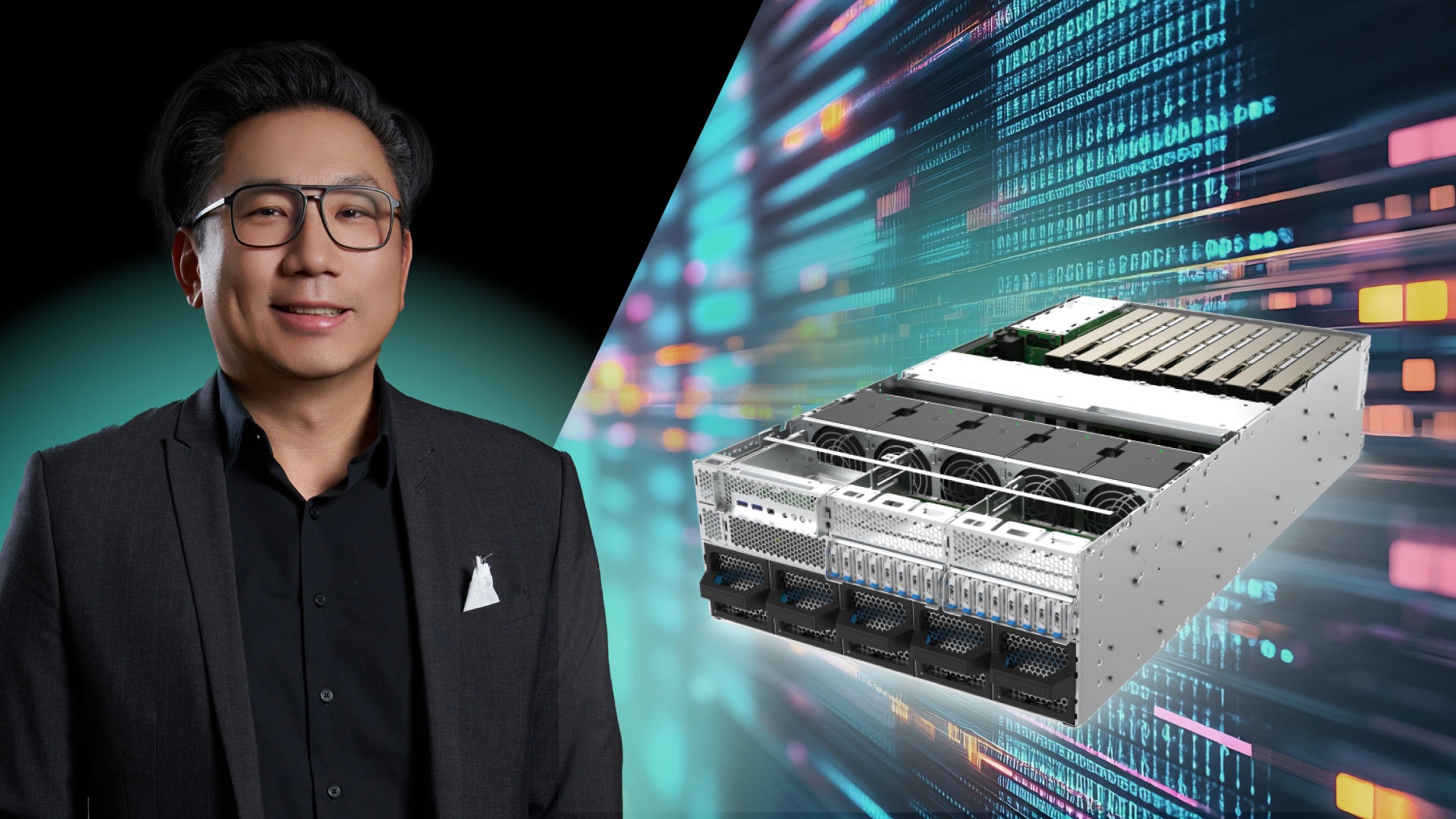
As LNG operators push deeper into AI-driven operations, the conversation is often dominated by models, algorithms, and software platforms. But according to Alan Chang, that framing misses a critical truth. Without a validated, industrial-grade computing foundation, even the most advanced AI will fail where it matters most.
That belief underpins the partnership between Beyond AI and Compal, bringing together decision-grade enterprise AI with a computing platform purpose-built for continuous, mission-critical industrial workloads.
We sat down with Alan to talk about why hardware matters in enterprise AI, what LNG environments demand from computing platforms, and how Compal’s SX420-2A enables Beyond AI’s enterprise architecture to operate securely, stably, and at full industrial scale.
Because LNG operations are unforgiving. This is not an office environment where you can tolerate latency, downtime, or inconsistent performance. AI in LNG supports decisions that affect safety, uptime, and millions of dollars in operational impact.
Advanced software is essential, but it is only half the equation. AI systems depend on a computing platform that can process data continuously, securely, and predictably. If the hardware foundation is unstable or underpowered, the entire AI stack becomes a liability instead of an asset.
In industrial environments, infrastructure is not an afterthought. It is the backbone.
LNG facilities operate around the clock. Data never stops flowing. Sensors, control systems, maintenance logs, and operational data streams are constant and often distributed across remote or harsh environments.
AI workloads in this context are not batch jobs that can wait. They are mission critical processes that must run continuously, often at the edge, with strict requirements for reliability, thermal stability, and security.
You are also dealing with long asset lifecycles. LNG operators expect systems to run for years, not months. That changes how you design and validate computing platforms.
The SX420-2A was designed with the requirements of industrial AI workloads in mind, rather than simply adapting a standard enterprise IT platform. That means focusing on sustained performance rather than peak benchmarks, predictable behavior under sustained, long-duration workloads, and resilience in real world operating conditions.
We have jointly validated it specifically to support continuous AI workloads. That includes thermal design for long run times, redundancy where it matters, and secure architecture to support enterprise grade AI deployments.
Our goal is to provide a computing foundation that customers can deploy with confidence, supporting AI-driven decision-making in mission-critical environments while maintaining stability, security, and scalability.
Explainable AI and decision grade AI place additional demands on the system. You are not just generating predictions. You are running reasoning engines, validation layers, and audit mechanisms alongside inference.
That requires consistent compute availability and low latency. If the infrastructure is unstable, you introduce noise into the system. That undermines trust.
A reliable computing foundation ensures that AI outputs are not only fast, but reproducible and auditable. That is essential in regulated industries like LNG where decisions must be justified and traceable.
Beyond AI is very clear about what enterprise AI needs to be. It must be explainable, secure, and operationally reliable at scale. That aligns perfectly with how we think about infrastructure.
The SX420-2A was designed to enable the entire Enterprise AI architecture from Beyond AI to operate as intended. Securely, stably, and at full industrial scale.
This is not about hardware competing with software. It is about building a foundation where infrastructure and AI architecture work together, so enterprise AI systems can operate as intended in real-world industrial deployments.
The biggest risk is false confidence. Teams believe they have deployed AI, but in reality they have built something fragile. It may work in a pilot, but it will fail under real operational pressure.
That leads to stalled rollouts, loss of trust from operations teams, and skepticism about AI as a whole. In industries like LNG, once trust is lost, it is very hard to regain.
Investing in the right computing foundation upfront reduces risk and accelerates adoption. It is a strategic decision, not a technical detail.
They should ask whether the platform is validated for continuous operation, not just capable on paper. They should ask how it behaves under sustained load, how it handles failures, and how it integrates into a secure enterprise AI architecture.
Most importantly, they should ask whether the infrastructure supports the kind of AI they actually need. Decision support, explainability, and operational resilience, not just raw compute.
As AI becomes more embedded in operations, infrastructure will become less visible but more critical. The best platforms will fade into the background because they simply work.
At the same time, demands will increase. More autonomy, more real time reasoning, and tighter integration with operational systems. That will require computing platforms that are purpose built for industrial AI, not adapted from consumer or enterprise IT models.
It means looking beyond specifications and asking harder questions.
How does this system perform after six months of continuous operation? How predictable is its behavior under sustained load? How well does the infrastructure support the AI architecture it is running?
The partnership between Compal and Beyond AI addresses those questions upfront. It is not about assembling components. It is about delivering an integrated foundation that industrial AI can rely on.
AI transformation in LNG succeeds or fails on trust. Trust in the software, trust in the data, and trust in the systems running underneath it all.
A validated, high performance computing platform is what makes that trust possible. Without it, AI remains an experiment. With it, AI becomes operational.