Cookie Preferences
By clicking, you agree to store cookies on your device to enhance navigation, analyze usage, and support marketing.
Thank you! Your submission has been received!
Oops! Something went wrong while submitting the form.

.svg)

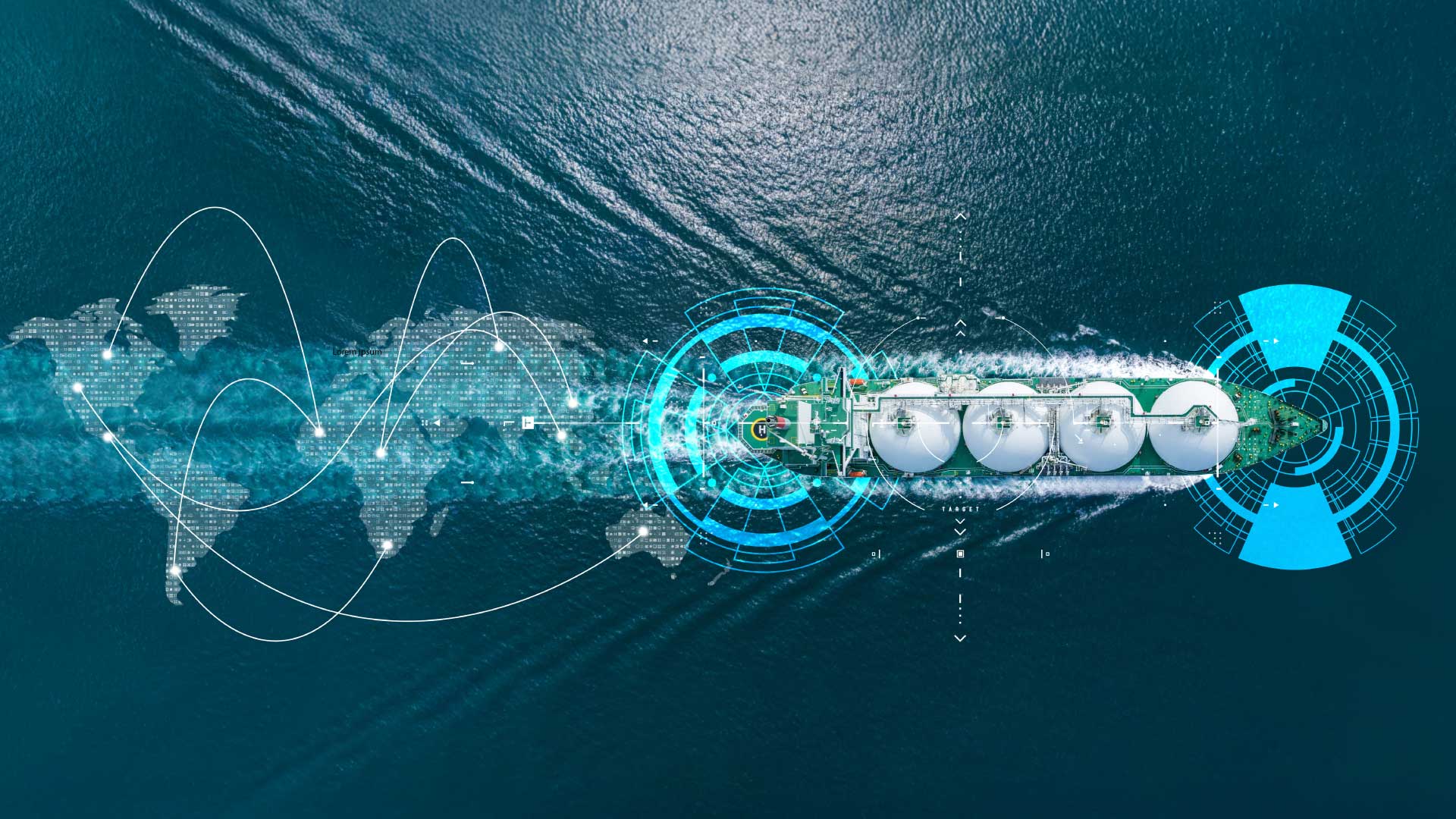
The LNG market has become one of the most geopolitically exposed segments of the global energy system. Over the past decade, LNG shifted from an optional supply source to a core pillar of national energy security strategies. That transformation has brought opportunity, but it has also introduced intense volatility that traditional forecasting and operational tools are struggling to keep up with.
As LNG26 approaches, geopolitical risk is shaping the agenda across major operators, including integrated gas and LNG businesses from QatarEnergy LNG, TotalEnergies, BP, Petronas, and Eni. These companies are preparing for a future where the market is influenced as much by policy decisions and global trade dynamics as it is by production capacity or shipping availability. Volatility is no longer an exception. It is the baseline. AI is emerging as the strategic capability that turns this volatility into something operators can manage with far greater confidence.
This article explores how AI is redefining decision support across the LNG value chain and why intelligent systems are becoming essential for navigating geopolitical uncertainty.
LNG markets have always reflected global energy demand, but today they also mirror instability. Trade tensions between major economies have disrupted procurement patterns and shifted cargo flows across Asia, Europe, and the Americas. Tariffs have influenced buying strategies, forcing importers to diversify supply sources and adjust long term contracting behaviors.
At the same time, instability in key shipping corridors, including the Red Sea, has created operational risk for LNG carriers. Rerouting increases transit times and costs, which directly affects pricing and tightens margins for both suppliers and buyers. Supply fluctuations also emerge when regional conflicts affect production zones or when new alliances drive rapid shifts in demand.
All of these pressures roll up into one reality. LNG economics are now shaped by geopolitics more than by geology. Operators must continuously interpret a growing set of external variables that move faster than conventional models can process.
In a volatile market, operators need a clear line of sight into the entire LNG ecosystem. But this is often where visibility collapses. Consider a few points of failure that appear during periods of geopolitical disruption.
Shipping delays.
When carriers reroute to avoid high risk areas, plant schedules, berthing plans, and offloading windows are immediately affected.
Demand fluctuations.
A single policy announcement or geopolitical escalation can create a sudden spike or drop in demand across major import regions.
Feedgas variability.
Shifts in upstream production or export prioritization impact liquefaction planning and delivery commitments.
Maintenance windows.
Volatility often arrives when operators least expect it, and maintenance schedules become more sensitive when the plant is needed for continuous output.
These challenges are not theoretical. They are day-to-day realities that LNG operators face in a politicized global market. Traditional tools do not connect these variables in real time, and they cannot reason through the operational constraints that determine the safest and most efficient response.
This is where AI provides meaningful value.
AI is not replacing experience in LNG operations. It is enhancing it. The strength of AI comes from its ability to process vast streams of data, interpret operational constraints, and deliver actionable recommendations that align with safety, efficiency, and commercial priorities. This combination creates a strategic advantage during geopolitical volatility.
1. AI improves forecasting beyond traditional models
Conventional forecasting relies on historical patterns. AI incorporates real time data, including geopolitical signals, economic indicators, shipping congestion, weather patterns, and storage trends. This produces a more dynamic and more accurate read on the market.
For LNG traders and commercial teams, this level of intelligence supports better time charter planning, contracting strategies, and pricing decisions.
2. AI surfaces early operational risks before they scale
Operational disruptions are magnified during periods of geopolitical tension. AI driven predictive maintenance identifies degradation in equipment performance long before it affects production. This gives maintenance teams more time to plan interventions without compromising output.
3. AI supports scenario modeling when uncertainty spikes
When trade policies shift or shipping lanes become unstable, operators need to understand the operational consequences immediately. AI can model different scenarios based on constraints such as feedgas availability, production limits, asset health, and downstream obligations.
This helps operators choose the safest and most profitable path forward.
4. AI helps preserve expert knowledge in a changing workforce
The LNG sector faces an aging workforce and a growing gap between experienced operators and new talent. AI systems capture expert reasoning and operational logic, allowing teams to maintain high quality decision making even as personnel structures evolve.
Together, these capabilities create a level of resilience that matches the pace of modern geopolitical change.
The conversations leading into LNG26 reflect a shift in thinking. The industry no longer sees AI as an experimental technology. It sees AI as a stability layer that strengthens asset performance, improves visibility, and reduces exposure to global uncertainty.
Integrated gas leaders are already moving toward digital ecosystems that combine human experience with intelligent automation. The companies that build this capability will outperform competitors in both resilience and efficiency. They will also be in the strongest position to meet the demands of buyers who now prioritize reliable supply above all else.
LNG is entering a period where geopolitical pressure will remain intense. Intelligent decision ecosystems will define the companies that thrive in this environment.
Geopolitical risk has become one of the most influential forces shaping global LNG economics. Operators are navigating a market that responds instantly to political decisions, supply chain pressures, and global shifts in energy strategy. That level of volatility cannot be managed with traditional forecasting or isolated operational systems.
AI offers a path forward. It helps operators see more clearly, act faster, and plan with more confidence. It strengthens decision making at every level of the value chain, from asset reliability to commercial strategy.
As LNG26 approaches, one message is becoming clear. The future of LNG will belong to operators who combine experience with intelligence. Those who invest in AI driven decision support will be the ones best equipped to manage geopolitical uncertainty while delivering reliable, secure, and efficient output.
Join us at LNG2026 to see how AI driven operational intelligence is transforming LNG resilience. Visit Beyond Limits at Stand 8105.
https://www.beyond.ai/events/beyond-limits-at-lng2026