Cookie Preferences
By clicking, you agree to store cookies on your device to enhance navigation, analyze usage, and support marketing.
Thank you! Your submission has been received!
Oops! Something went wrong while submitting the form.

.svg)

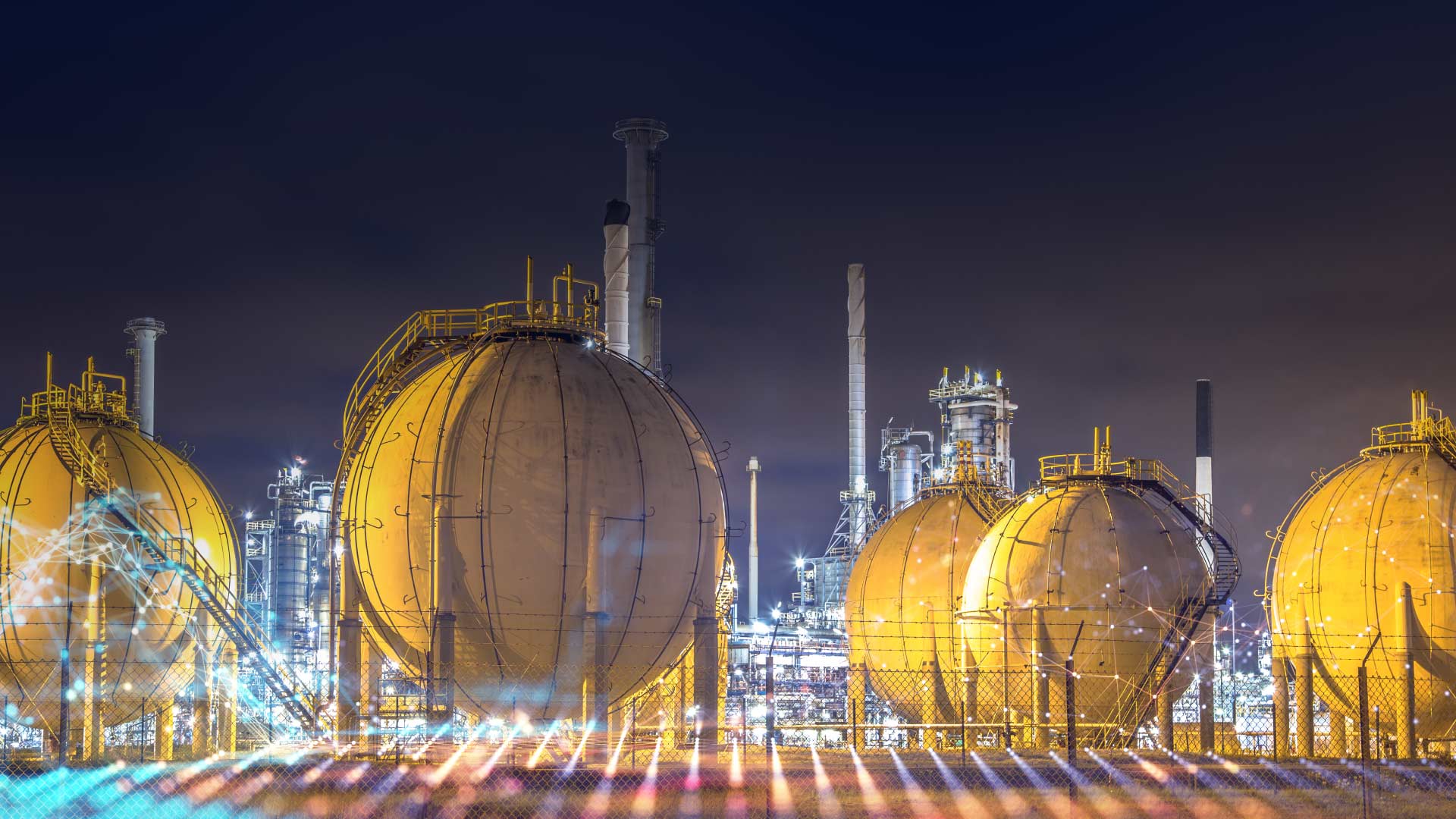
The LNG market is entering a decisive period where affordability, energy security, and operational reliability will shape competitive advantages more than ever. Ahead of LNG26, the industry is watching three forces with growing urgency. Price pressure is intensifying in key importing markets. Energy security remains a strategic concern for governments and operators. Reliability across the entire LNG value chain is now a defining metric for performance and reputation.
The challenge is clear. The LNG system is becoming more complex while expectations are rising. Operators must maintain stable output, manage unpredictable feed gas conditions, respond to market volatility, and deliver consistent performance to buyers who now view LNG as a pillar of national energy stability.
In this environment, industrial AI moves from an efficiency tool to a strategic lever. It becomes essential for managing uncertainty, improving affordability, and strengthening resilience in an increasingly interconnected LNG ecosystem.
The IEA forecasts a significant global supply expansion, with nearly 300 bcm of new LNG export capacity expected by 2030. Large developments in the United States and Qatar will reshape the supply landscape and apply downward pressure on long term prices.
Yet affordability is not improving evenly across regions. In price sensitive markets, demand remains constrained due to persistent volatility. Many governments still spend billions on subsidies to protect consumers from sudden price spikes. Near term supply additions are limited, and geopolitical risks continue to drive unpredictable trading conditions.
Operators cannot rely on future supply alone to stabilize affordability. Cost control inside the plant becomes equally important, and this is where AI starts delivering real economic value.
Industrial AI provides plant level control where savings are most tangible.
It delivers:
These improvements directly support affordability during periods of tight margin or prolonged volatility.
The global energy system is still adjusting to major shifts in supply routes after 2022. Many countries now rely on LNG as a crucial component of energy security. It provides flexibility, reduces exposure to pipeline constraints, and stabilizes grids during peak demand.
The industry is moving toward more flexible LNG contracts. Destination free volumes are expected to exceed half of the market by 2030, giving buyers greater choice and suppliers more commercial diversity. This flexibility increases opportunity but also introduces operational and logistical complexity for producers and midstream operators.
Industrial AI helps operators maintain compliance with contractual obligations and supply expectations even in volatile conditions.
It gives teams:
Energy security depends on confidence. AI helps build that confidence by improving the predictability and stability of operations.
Reliability has always been important in LNG. Today it is the industry’s performance currency. More power grids depend on LNG for stable generation. More countries rely on LNG imports for economic continuity. Any disruption now carries significant national and commercial implications.
The industry cannot afford downtime, production shortfalls, or slow responses to abnormal conditions. Every percentage point of reliability has measurable impact on affordability, energy security, and customer trust.
LNG operations involve thousands of decisions each week. Some are routine. Others require judgement that blends engineering knowledge, historic plant behaviour, and current asset status. Expertise gaps and workforce transitions intensify this risk.
AI helps by:
This creates more resilient operations and reduces the reliance on shrinking pools of specialist experience.
The LNG market is transitioning to a more fluid and more competitive structure. Operators that can stabilize performance, manage volatility, reduce cost, and deliver consistent output will outperform the market. AI accelerates this shift from reactive to proactive control. It becomes central to how LNG companies defend margins, protect supply commitments, and deliver reliability under pressure.
Global LNG Dynamics is not only about supply and demand. It is about capability. The ability to run smarter, faster, and more confidently in a world that is becoming less predictable.
Beyond Limits provides industrial AI designed for these exact conditions. It combines advanced reasoning technology with operational data to support safer, more efficient, and more reliable LNG production. The operators who embrace this shift now will be the ones who shape the next decade of LNG performance.
Visit us at Stand 8105 at LNG2026 to explore how AI can strengthen your LNG affordability, energy security, and operational resilience.